
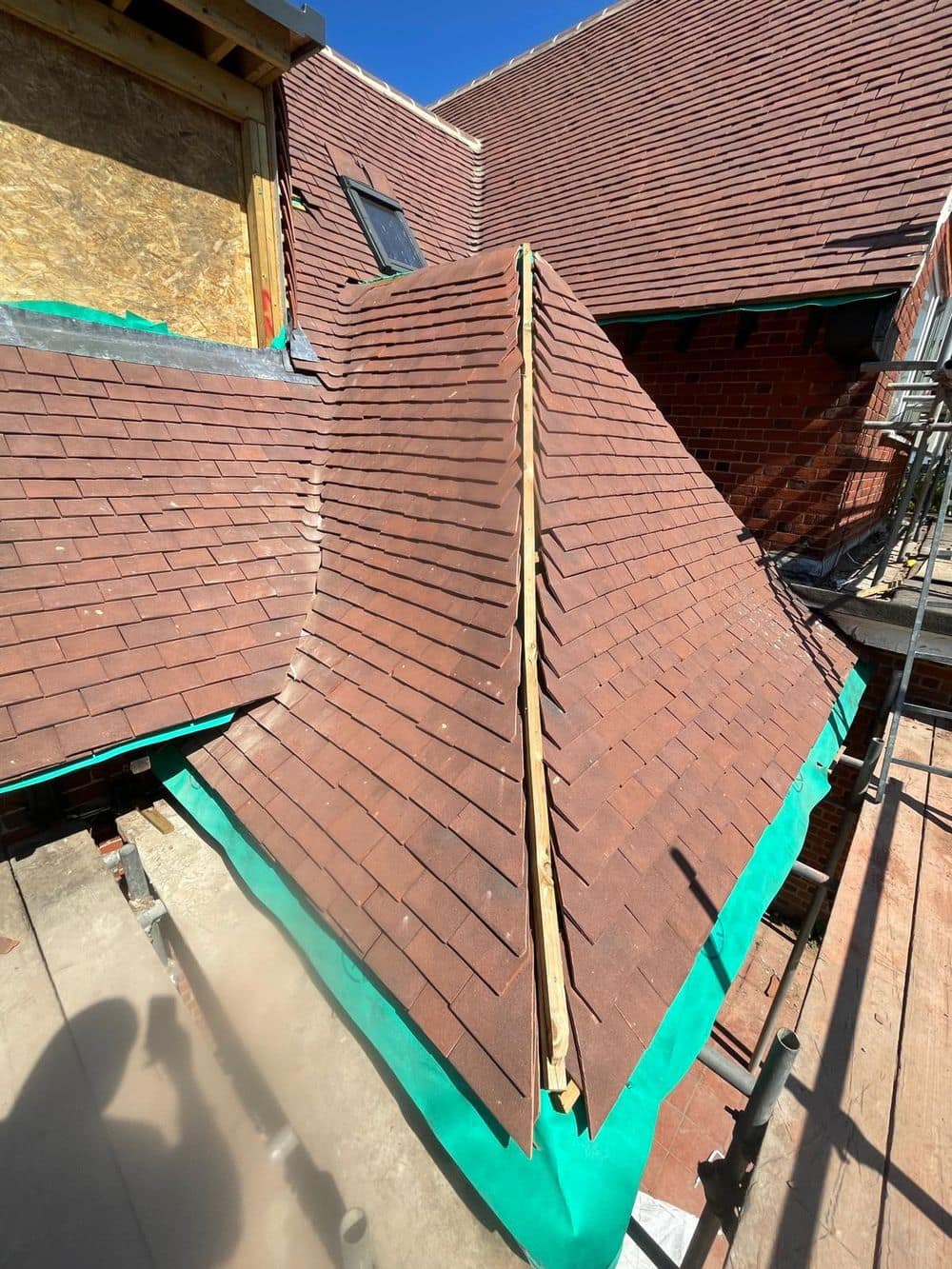
You notice a damp patch on the ceiling. Or maybe there is water dripping down the inside of a wall. It only seems to happen when it rains heavily, which makes it easy to put off dealing with. But a roof leak rarely stays small for long, and the longer it goes on, the more damage it does inside your home.
This post looks at the most common reasons a pitched roof leaks in heavy rain, what you should do first, and when to call a roofer. If you have a flat roof rather than a pitched one, our post on flat roof leaking and your options will be more relevant to you.
Is It Definitely a Leak from the Roof?
Before assuming the worst, it is worth knowing that not every damp patch comes from a hole in the roof. Condensation in the loft space can drip onto ceilings and look almost identical to a roof leak. If the damp seems to appear without rain, or is spread across a wide area rather than coming from a single point, condensation may be the cause. That said, if it happens during or shortly after heavy rain, the roof is the most likely culprit and deserves a proper look.
Common Causes of a Leaking Pitched Roof
Slipped, Cracked or Missing Tiles or Slates
This is the most obvious cause, and also one of the most common. Tiles and slates can crack with age, lift in high winds, or slip out of position over time. Even a single missing or broken tile leaves the underlay exposed, and heavy rain will find its way through eventually. If you have recently had a storm, it is worth reading our guide to storm damage and what to do first. Our roof repairs service covers tile and slate replacements across Bedfordshire, Buckinghamshire and Hertfordshire.
Failed Flashing Around Chimneys and Where Roofs Meet Walls
Flashing is the metal seal, usually lead, that sits where the roof meets a vertical surface such as a chimney, a parapet wall, or a dormer. Over time, the flashing can pull away from the wall, crack, or the sealant around it can fail. When that happens, water gets in behind it and works its way down inside. Chimney flashing is one of the most frequent sources of roof leaks we see across the area. If the chimney itself is in poor condition, our chimney rebuilds service may be worth considering at the same time.
Worn or Damaged Roof Valleys
A valley is the channel formed where two roof slopes meet. It carries a significant volume of water during heavy rain, which makes it a vulnerable spot. Lead or mortar valleys can crack, lift or deteriorate over the years, and when they do, water can track sideways rather than flowing down and off the roof.
Loose Ridge Tiles or Failed Ridge Mortar
Ridge tiles sit along the very top of the roof and are traditionally bedded in mortar. That mortar hardens and shrinks with age, and eventually cracks or falls away. Loose ridge tiles rattle in the wind and, if left, can slide off entirely. Water getting in at the ridge tends to spread across a wide area of the loft before it shows up inside. Our ridge tiles service covers repairs and re-bedding as well as full replacements.
Blocked or Overflowing Gutters
A gutter that is full of moss, leaves and debris cannot do its job. In heavy rain, the water has nowhere to go and spills back towards the roof edge or runs straight down the wall. Over time this can soak through the fascia, the felt, and eventually into the ceiling below. Keeping gutters clear is one of the simplest ways to protect a roof. Our guttering service covers repairs and replacements across the three counties.
Ageing Felt or Underlay
Beneath your tiles or slates sits a layer of roofing felt or breathable membrane. This acts as a secondary barrier if water gets past the tiles. On older roofs, this felt becomes brittle and tears, which means it no longer does that job. Heavy rain can overwhelm it quickly. If the underlay has failed across a large area, it is usually a sign that a new roof may be the most sensible long-term option.
What to Do First
If you notice a leak during heavy rain, here is what to do straight away.
Contain the water inside. Put towels, buckets or sheeting down to protect flooring and belongings. The less secondary damage there is, the better.
Stay off the roof. A wet roof is a dangerous one. Leave the inspection to someone with the right equipment and experience.
Note where and when it appears. Which room, which part of the ceiling or wall, and whether it is happening during rain or after it stops. That information helps a roofer pinpoint the source much more quickly.
Call a roofer. If there is an active leak during rain, do not wait. Our emergency roof repair service is there for exactly these situations. For repairs that can wait until the weather clears, we will arrange a visit and give you a free, no-obligation quote.
Get in Touch with Dexters Build
We are a family-run roofing company with over ten years of experience, covering Bedfordshire, Buckinghamshire and Hertfordshire. Whether it is a single slipped slate or a more serious problem that needs proper investigation, we will give you an honest assessment and a fully guaranteed repair.
Give us a call on 07951 017425 or visit our contact us page to get your free quote.